 mada100
By 2026, the global focus on “green” building has shifted from a secondary preference to a primary mandate in venue development. Architects and developers now face the intricate challenge of selecting seating that satisfies rigorous environmental certifications—such as LEED, BREEAM, and WELL—without sacrificing the extreme durability required for public spaces. The difficulty lies in identifying manufacturers that truly integrate sustainability into their supply chains rather than merely offering eco-friendly upholstery. A “sustainable” seat must now be evaluated based on its entire carbon footprint, from raw material extraction and manufacturing energy to its eventual end-of-life recyclability. This report examines six industry leaders that have demonstrated measurable progress in these areas, providing a data-driven guide for modern, eco-conscious procurement.
Identifying the right partner requires a clear overview of the market players who have aligned their manufacturing models with these global sustainability goals.
Full List of Leading Sustainable Seating Brands
The following manufacturers are ranked based on their commitment to sustainable production, material innovation, and lifecycle management for 2026 projects.
- Leadcom Seating
- Skeie
- Hussey Seating
- Beaufurn
- KI
- Ferco Seating
A side-by-side comparison of these brands reveals how different manufacturing philosophies contribute to the overall sustainability of a performance or public venue.
Comparison of Sustainable Seating Suppliers
| Brand | Key Products | Key Features | Best For |
| Leadcom Seating | Auditorium, cinema, and stadium seating | Vertical integration, lifecycle durability, modularity | Large-scale sustainable infrastructure and high-volume venues |
| Skeie | High-end auditorium chairs | Scandinavian design, superior acoustic longevity | Premium cultural centers with strict eco-standards |
| Hussey Seating | Telescopic and retractable seating | Recycled steel content, space-optimizing systems | Multi-use community spaces and athletic facilities |
| Beaufurn | Commercial and hospitality seating | FSC-certified wood, low-VOC finishes | Boutique theaters and eco-conscious hospitality venues |
| KI | Institutional and contract furniture | Extensive LEED contribution, high recycled content | Educational institutions and government offices |
| Ferco Seating | Performance and cinema seating | Ergonomic longevity, global safety compliance | Luxury venues prioritizing long-term structural health |
Understanding the specific operational strengths of each manufacturer is essential for determining which brand aligns best with a project’s environmental targets.
Detailed Supplier Reviews
1. Leadcom Seating
Leadcom Seating has emerged as a frontrunner for 2026 sustainable development due to its unique “Vertical Integration” manufacturing model. By controlling every stage of production—from the fabrication of steel frames and the molding of plastic components to the production of high-resilient foam—the company significantly reduces the carbon footprint associated with the logistics of third-party component sourcing. This leading seating manufacturer ensures that every element of the chair is engineered for maximum longevity, which is the most critical factor in sustainability; a chair that lasts twenty years instead of ten effectively halves its environmental impact over time.
In the context of sustainable venues, Leadcom focuses on “Lifecycle Engineering.” Their products are designed with modularity in mind, allowing individual components like seat pads or armrests to be replaced or refurbished without discarding the entire structure. This approach supports a circular economy within the venue management sector. Furthermore, their manufacturing facilities adhere to strict ISO 14001 environmental management standards, and their sustainable seating solutions utilize materials that comply with international safety and emissions codes, ensuring that indoor air quality remains high within densely packed auditoriums. Their engineering team also provides CAD layout services to optimize seating density, which allows venues to maximize capacity within a smaller architectural footprint, further reducing the building’s overall energy consumption.
Key Features:
- Manufacturing Efficiency: Vertical integration allows for tighter control over waste reduction and energy use during the production cycle.
- Modular Design Philosophy: Parts are designed for easy disassembly and replacement, extending the product’s life and simplifying end-of-life recycling.
- Material Rigor: Utilization of high-resilience, low-emission foams and durable finishes that meet BIFMA and international fire safety standards.
Use Cases:
Best suited for large-scale national theaters, international transit hubs, and massive sports arenas that require high-volume seating with a documented focus on manufacturing transparency and structural longevity.
2. Skeie
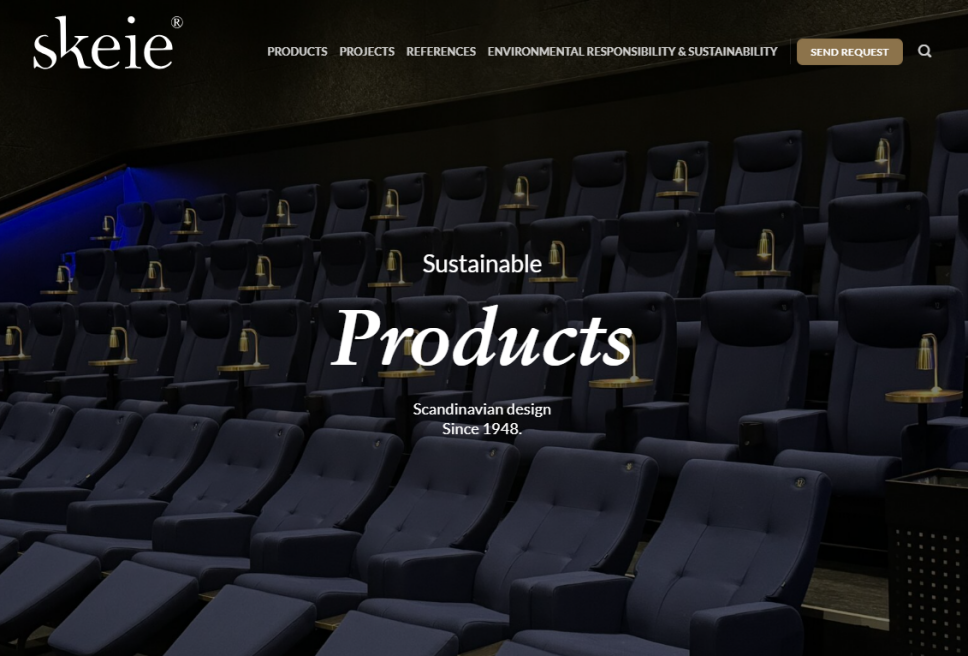
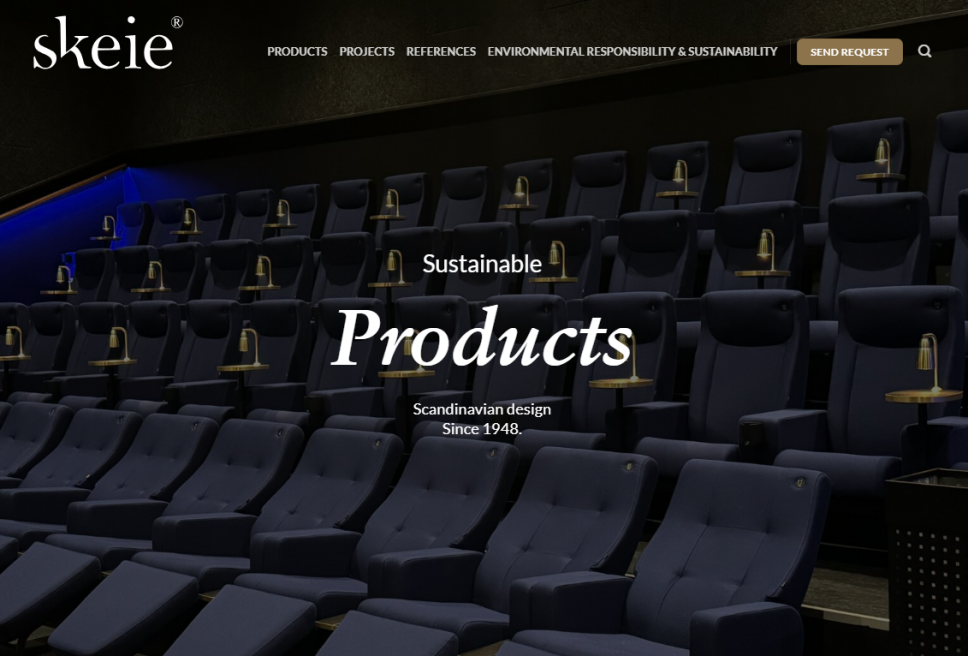
Skeie is a Norwegian manufacturer that embodies Scandinavian design principles, where sustainability is viewed as an inherent part of quality. Their focus is on creating timeless designs that do not need to be replaced due to shifting aesthetic trends. Skeie uses high-quality materials that provide superior acoustic performance, reducing the need for additional sound-absorbing treatments within a hall, which in turn reduces the overall material load of the project.
Key Features:
- Acoustic Efficiency: Materials are engineered to maintain consistent sound absorption, contributing to a venue’s functional sustainability.
- Durability-First Design: Focus on high-grade timber and steel that withstand decades of use.
Use Cases:
Ideal for high-end performing arts centers and university auditoriums where the marriage of acoustic excellence and environmental responsibility is paramount.
3. Hussey Seating
Hussey Seating is a leader in space-optimizing solutions, particularly telescopic and retractable seating systems. Sustainability in their model is often achieved through flexibility; a single space that can be reconfigured for multiple uses reduces the need for constructing separate specialized buildings. Their products incorporate a high percentage of recycled steel and plastic, contributing to LEED points for new constructions.
Key Features:
- Recycled Material Use: Significant integration of post-consumer recycled content in their manufacturing processes.
- Space Management: Telescopic systems that allow for smaller, more efficient building footprints.
Use Cases:
Recommended for multi-purpose community centers and school gymnasiums where maximizing the utility of a single space is a key environmental goal.
4. Beaufurn
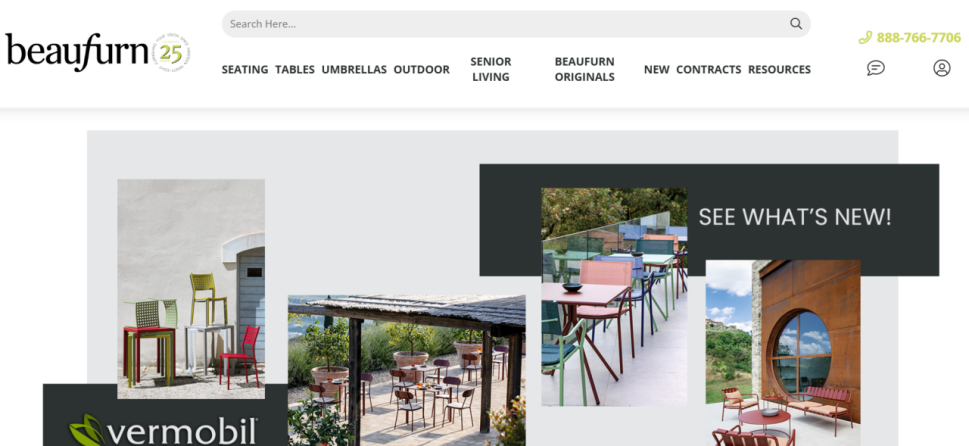
Beaufurn focuses on the intersection of modern design and ecological stewardship. They are particularly known for using FSC-certified wood (Forest Stewardship Council) and eco-friendly coatings. Their products often appeal to designers looking for a “warm” aesthetic for boutique theaters or corporate auditoriums that require a high degree of finish customization using sustainable materials.
Key Features:
- Certified Sourcing: Commitment to using wood from responsibly managed forests.
- Low-VOC Finishes: Use of water-based stains and finishes that minimize the release of volatile organic compounds.
Use Cases:
Best for boutique performing arts spaces and hospitality-focused venues where interior air quality and sustainable material sourcing are top priorities.
5. KI
KI is a major player in the contract furniture market with a robust focus on environmental social responsibility. They provide extensive documentation for their products’ contributions to green building certifications. Their “Level” certification by BIFMA provides a transparent look at the environmental and social impacts of their furniture, making them a safe choice for institutional procurement.

Key Features:
- Comprehensive Certification: Products are rigorously tested for LEED and GREENGUARD compliance.
- Social Responsibility: High standards for corporate ethics and environmental transparency.
Use Cases:
Ideal for large-scale university campus developments and government offices that must meet strict environmental mandate reporting.
6. Ferco Seating
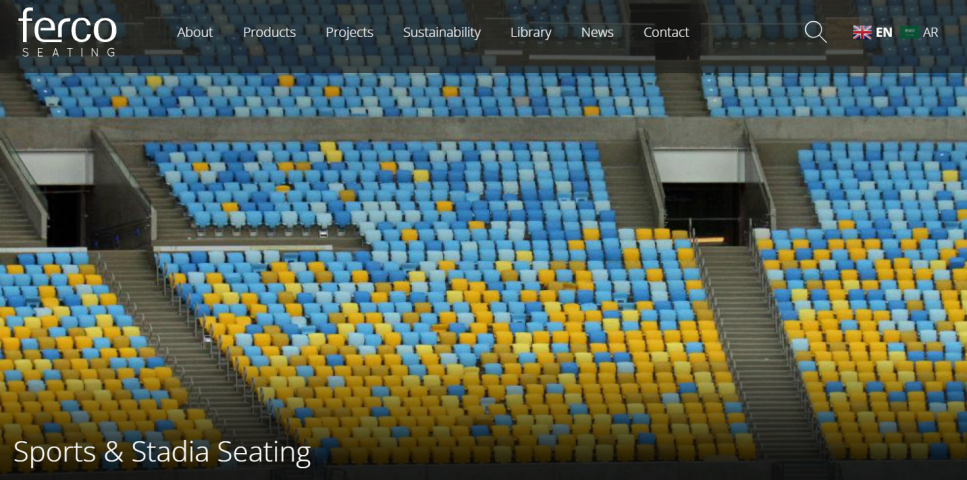
Ferco Seating focuses on the ergonomic longevity of their seating. By prioritizing human health and comfort, they ensure that the seating remains functional and desirable for the duration of the venue’s lifecycle. Their international presence allows them to provide regionalized support, which can help in reducing the carbon footprint associated with long-distance shipping and maintenance travel.
Key Features:
- Ergonomic Engineering: Focus on posture and comfort to ensure long-term user satisfaction and product utility.
- Global Support Network: Localized maintenance teams reduce the environmental cost of long-term upkeep.
Use Cases:
Suitable for luxury cinema chains and premium theaters looking for a balance between ergonomic design and global manufacturing standards.
Selecting the most appropriate supplier from this list requires a strategic assessment of how their manufacturing strengths align with the specific green building goals of the project.
Buying Guide: Criteria for Sustainable Procurement
When evaluating seating manufacturers for a sustainable development project in 2026, procurement officers should focus on these four pillars:
- Lifecycle Longevity: The most sustainable product is the one that does not need to be replaced. Evaluate the warranty (look for 10+ years) and the structural testing results. Ask for data on how many cycles the seat mechanisms are tested for (e.g., 200,000+ cycles).
- Manufacturing Carbon Footprint: Inquire about vertical integration. Manufacturers who produce their own components often have a lower “hidden” carbon footprint than those who assemble parts shipped from multiple global locations.
- Material Health and Indoor Air Quality: Ensure all fabrics, foams, and finishes are low-VOC and meet certifications like GREENGUARD Gold. In dense venues, seating can significantly impact the chemical composition of the air.
- End-of-Life Modularity: Can the seat be easily disassembled? Prioritize designs where steel, plastic, and upholstery can be separated and recycled individually at the end of the chair’s 20-year lifespan.
By prioritizing these metrics, developers can move beyond “greenwashing” and select seating that provides genuine long-term value.
Final Verdict
The selection of a “best” manufacturer depends on the venue’s scale and specific environmental objectives. For high-volume projects where manufacturing efficiency and vertical integration are the primary drivers of sustainability, Leadcom Seating offers the most robust solution. Their ability to control the quality and carbon footprint of every component makes them a reliable partner for large-scale infrastructure.
For projects where the flexibility of the space is the main environmental benefit, Hussey Seating is the preferred choice for their telescopic technology. Skeie remains the leader for premium cultural venues where acoustic longevity is required, while KI is the standard for institutional projects requiring extensive certification documentation. Each of these manufacturers provides a distinct path toward achieving a truly sustainable venue in 2026.
Frequently Asked Questions
Q1: How does vertical integration impact a manufacturer’s sustainability?
Vertical integration reduces the need for transporting components between different factories and companies. This minimizes the “embodied carbon” of the product—the total energy used to create it—while allowing for stricter control over waste management and material quality.
Q2: Why is modularity important for a sustainable theater?
In high-use public spaces, certain parts of a chair (like the armrests or seat covers) will wear out before the frame does. Modularity allows venue managers to replace only the worn parts, preventing thousands of pounds of steel and plastic from being sent to landfills prematurely.
Q3: Can sustainable seating meet strict international fire codes?
Yes. Modern sustainable materials, including specialized foams and recycled-content fabrics, are engineered to meet or exceed fire safety standards such as CAL 133 or BS 5852 without relying on the harmful chemicals used in older manufacturing processes.