 mada100

Equipment purchasing decisions often become complicated when production targets rise but capital budgets remain limited. A used transformer may appear financially attractive, while a new unit offers clearer information about its condition and operating history. For manufacturers evaluating an MFDC welding transformer, the real comparison involves more than the purchase price: electrical performance, remaining service life, compatibility, maintenance exposure, and production risk all deserve attention before a final decision.
Electrical Performance and Operating Condition
Medium-frequency direct-current welding systems convert incoming electrical power through a transformer and rectification stage to supply the welding circuit. Their performance depends on winding condition, insulation integrity, electrical connections, and the interaction between the transformer and its control equipment. Even minor deterioration can affect reliability under demanding production conditions.
A new unit generally provides a defined specification and a known starting point for maintenance planning. Buyers can request rated power, operating frequency, duty cycle, cooling requirements, and applicable test documentation. These details help engineers assess whether the equipment matches the intended welding schedule and workload.
Used equipment requires a more detailed technical inspection. Maintenance records, insulation test results, evidence of overheating, and the condition of terminals and cooling passages can reveal problems that are not visible externally. A resistance welding transformer should also be evaluated under suitable operating conditions, since an unloaded inspection cannot establish how it performs during actual welding cycles.
Purchase Price and Long-Term Ownership Costs
The initial cost difference between new and used equipment can be substantial, especially when a factory needs several units for an expansion project. However, purchase price alone provides an incomplete view of the financial commitment. Installation, commissioning, transport, spare parts, inspection, and potential production interruptions may change the overall calculation.
Used equipment can be economical when its history is documented, its condition is verified, and replacement parts remain accessible. The savings become less compelling if the transformer requires rewinding, insulation repairs, or extensive modifications to fit an existing machine. Procurement teams should request an itemized quotation for any necessary refurbishment before comparing alternatives.
New equipment may offer a more predictable maintenance starting point, although its value still depends on technical suitability and supplier support. A lifecycle estimate should consider expected operating hours, maintenance intervals, energy losses, downtime exposure, and the cost of keeping critical spare parts available. For high-volume manufacturing, even a short interruption can outweigh part of the initial saving.
Compatibility, Integration and Maintenance History
Replacing a transformer is rarely a simple matter of matching its power rating. The existing controller, rectifier, welding gun, secondary circuit, and cooling system must all be compatible with the proposed equipment. Differences in mounting dimensions, terminals, electrical characteristics, or control requirements can introduce additional engineering work.
A new MFDC welding transformer allows the engineering team to establish installation requirements from current documentation and coordinate commissioning around a known specification. Nevertheless, new equipment may still require adapters, revised wiring, or controller adjustments when it is fitted to an older production line. Compatibility should be verified before an order is confirmed.
With used equipment, traceability becomes especially important. Buyers should establish the original model, service history, previous operating conditions, repair records, and any modifications made during its service life. If documentation is missing, independent inspection and electrical testing can reduce uncertainty, although neither can fully reconstruct an unknown maintenance history.
Supplier Support and Equipment Selection
After-sales service can determine whether a technically suitable transformer remains practical over several years of operation. Manufacturers should clarify warranty coverage, repair procedures, replacement-part availability, and the technical assistance provided during commissioning. Used equipment purchased through a reseller may carry different support conditions from equipment supplied directly by its original manufacturer.
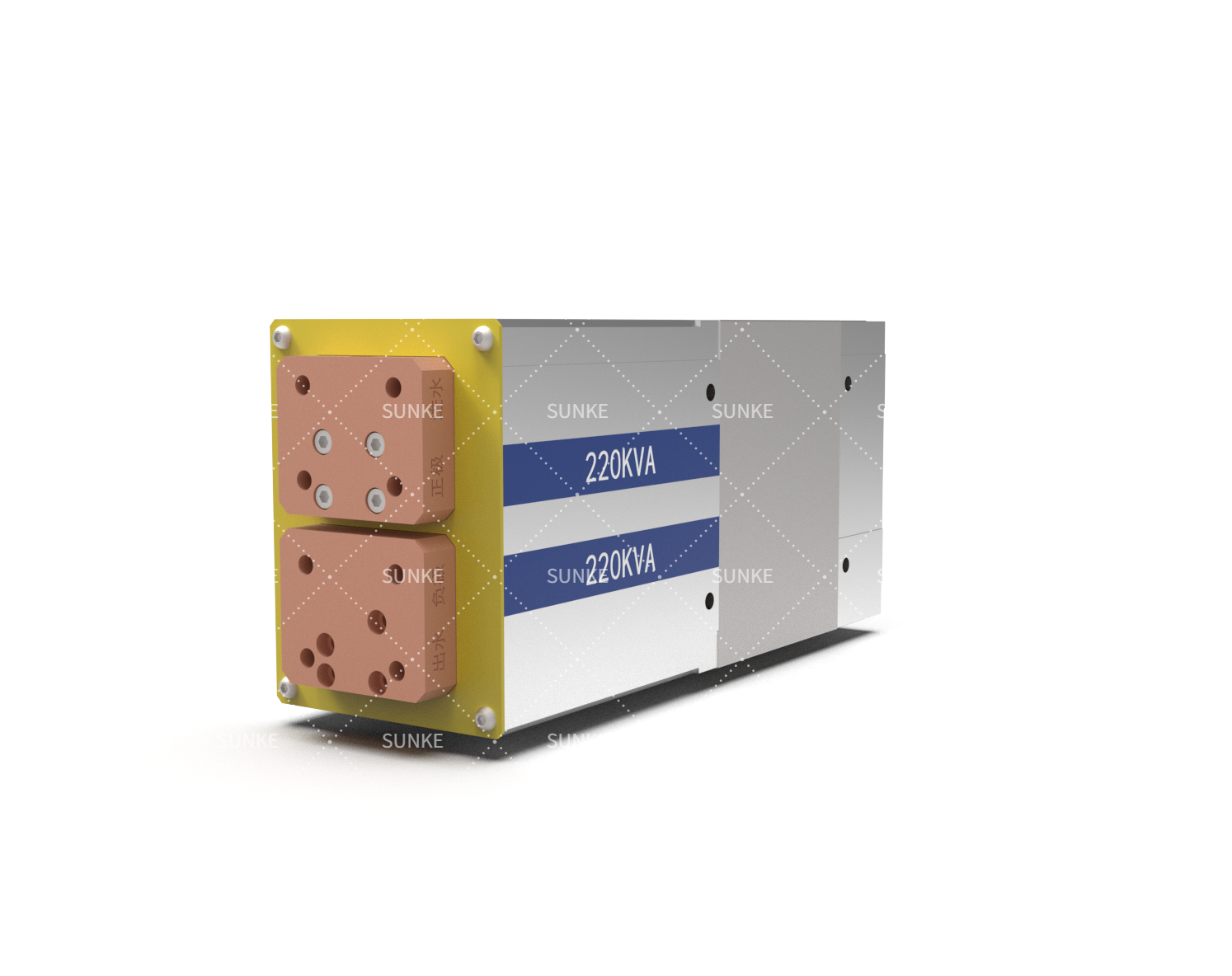
Sunke‘s medium-frequency DC transformer range lists power ratings from 75 kVA to 250 kVA. Buyers evaluating its equipment should confirm the exact model, rated duty cycle, electrical specifications, and cooling requirements against the intended application. These published ratings provide a useful starting point for technical comparison, but final suitability depends on the complete welding system and the manufacturer’s applicable documentation.
Supplier evaluation should also include the quality of technical records and the clarity of responsibilities if commissioning reveals a problem. For used units, the seller’s inspection report and any refurbishment documentation deserve particular scrutiny. A clear acceptance procedure can establish measurable criteria for electrical performance, temperature rise, and weld quality before the equipment enters routine production.
Conclusion
Neither new nor used equipment is automatically the better investment. A new unit may suit operations that prioritize predictable condition and documented specifications, while a carefully inspected used transformer can offer value when its history and remaining service life are credible.
The decision should reflect production criticality, maintenance resources, integration demands, and the financial consequences of downtime. By validating the technical details before purchase, manufacturers can select equipment that fits their actual operating conditions rather than relying on price or appearance alone.