 mada100

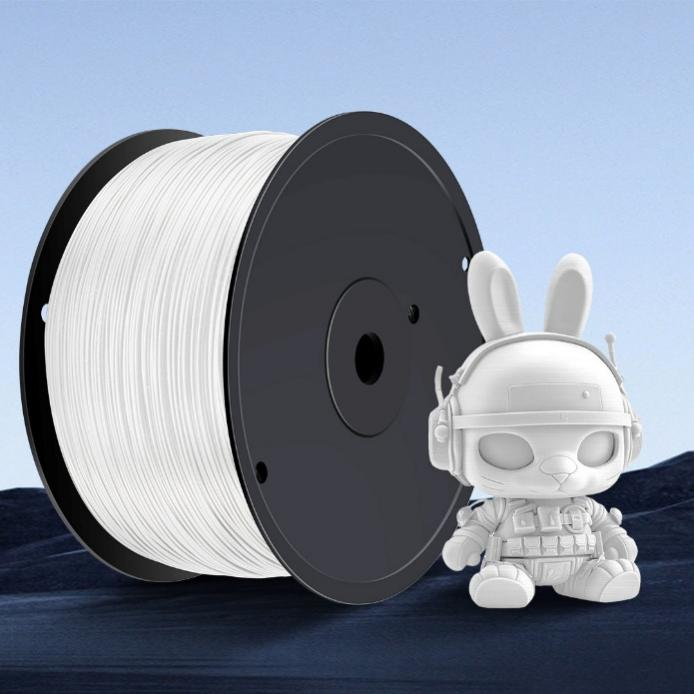
Frequent spool changes can interrupt large production runs and increase operator workload. Whether 5kg spools deliver meaningful savings depends on the price per kilogram, shipping costs, storage requirements, and compatibility with the printer setup. For print farms with sustained material demand, larger spools can reduce the frequency of roll changes and help keep long jobs running with fewer manual interruptions.
However, operators must account for hardware requirements, such as heavy-duty roller mounts, increased extruder torque, and active environmental storage controls. By evaluating these mechanical factors and sourcing reliable bulk materials from industry leaders like SUNLU, commercial print farms can streamline long-format production cycles effectively.
Evaluating the overall cost-to-benefit ratio of bulk spools requires analyzing both material pricing and operational overhead. Standard 1kg spools are ideal for short prototyping jobs, but high-volume commercial operations lose valuable machine hours every time a roll runs out mid-build.
Bulk spools eliminate frequent manual intervention, allowing 3D printers to operate continuously overnight or over long weekends. This uninterrupted workflow is particularly beneficial when fabricating massive industrial components, architectural mockups, or batch runs of end-use functional parts.
Furthermore, purchasing high-volume spools reduces packaging waste and lowers freight overhead per unit weight. Commercial facilities handling large orders can reduce their overall material procurement expenses while maintaining high operational throughput across multiple machines.
Advantages of Utilizing Bulk Spools for PLA Filaments
Polylactic Acid remains one of the most widely processed polymers in additive manufacturing due to its ease of extrusion and low thermal expansion. When running large-format production jobs, utilizing 5kg spools of PLA Filaments ensures color consistency across massive surface areas that would otherwise require multiple small spools.
Batch-to-batch color variations can visually compromise large architectural models or multi-part assemblies. Utilizing a single continuous 5kg source ensures uniform pigment distribution and consistent physical properties throughout the entire fabrication process.
Additionally, bulk bioplastic formulations maintain exceptional dimensional stability during lengthy extrusion cycles. Because the material contracts minimally upon cooling, large-scale structural models remain flat on the build platform without severe corner warping or internal stress buildup.
Hardware Considerations for the 5kg 3D filament spool
Although larger spools can reduce the frequency of roll changes, their added weight and dimensions require a compatibility check. Some desktop printers are not designed to support a 5kg spool on the stock holder, so operators should verify the holder’s load rating and available clearance before installation. An appropriately rated external spool holder may be needed.
A large spool can increase rotational inertia, and a poorly aligned or high-friction holder can make filament feeding less consistent. If the filament path creates excessive resistance, the extruder may struggle to feed material reliably. A well-supported spool holder, smooth rotation, and a clear feed path can help reduce these risks.
Depending on the printer’s design, a suitably rated external spool holder with low-friction rotation may improve feeding from a 5kg roll. Keep the filament path as short and unobstructed as practical, and use a PTFE guide tube only when it is compatible with the printer and helps reduce friction or tangling.
When purchasing a large-format 3D filament spool, verifying physical hub dimensions and mounting compatibility is essential. The table below outlines the authoritative technical specifications for standard SUNLU 5kg bulk spools to assist facilities in configuring their hardware.
| Core Technical Parameter | Official SUNLU 5kg Specification |
| Net Material Weight | 5.0 kg (11.02 lbs) |
| Dimensional Tolerance | 1.75 mm ± 0.02 mm |
| Spool Outer Diameter | 200 mm (8.00 inches) |
| Spool Hub Hole Diameter | 56 mm (2.20 inches) |
| Spool Overall Width | 63.5 mm (2.50 inches) |
| PLA Extrusion Temperature | 200–230°C (Bed: 50–60°C) |
| PETG Extrusion Temperature | 240–260°C (Bed: 60–70°C) |
Environmental Storage and Moisture Controls
A 5kg spool may remain in use for an extended period, making moisture management important for materials that are sensitive to humidity. Moisture exposure can affect extrusion quality and, depending on the material, may contribute to stringing, surface defects, or weaker layer bonding.
Because a 5kg spool may not fit in a standard filament dry box, operators can consider a suitably sized airtight container or large vacuum-sealed bag with an appropriate amount of desiccant. Active drying may be useful when a filament requires it, but the recommended temperature and duration should follow the manufacturer’s instructions.
Store unused filament in a cool, dry place and follow the product-specific storage guidance. Avoid assuming a universal shelf life, since storage life and performance depend on the material formulation, packaging, and environmental conditions.
Application Metrics and Safety Standards
Beyond general mechanical settings, specialized industrial applications require strict adherence to material safety and environmental standards. Understanding these operational boundaries prevents cross-contamination and ensures regulatory compliance during production.
For applications involving potential food contact, users should verify the specific filament formulation and applicable regulatory requirements rather than assuming that a material is automatically food-safe. Printer components, previous material use, cleaning procedures, and the finished part’s surface can all affect suitability. A dedicated nozzle may help reduce certain contamination risks, but it does not by itself establish food-contact compliance.
Bulk printing can reduce the number of empty spools and leftover ends, but the environmental benefit depends on the material and the waste-management options available. Facilities should separate compatible scrap where practical and check whether local recycling providers accept the relevant filament type. Reducing failed prints and unnecessary material use can also help limit waste.
Conclusion
For commercial print farms and high-volume creators, 5kg spools may help reduce the frequency of roll changes and simplify material handling when the printer and storage setup can accommodate them. Before choosing a 3D filament spool, verify holder capacity, spool dimensions, feed-path compatibility, and storage requirements.
Comparing the actual cost per kilogram with shipping, storage, and equipment expenses can help determine whether a larger spool is the right choice. Following the manufacturer’s material and printer recommendations can also help reduce avoidable feeding and print-quality issues, although no setup can guarantee uninterrupted production.