 mada100

Managing scalable energy loads is a core challenge for modern residential solar installers and commercial system integrators. System operators prioritize efficient capacity expansion as energy loads rise. For small and medium residential scenarios, Low Voltage (LV) Solar Battery Storage delivers the most viable expansion solution. Technical teams scale capacity via parallel module stacking instead of full battery bank replacement, safely sustaining the base 48V system voltage while raising total amp-hour output.
Configuring these modules in parallel requires precise electrical engineering, proper communication linking, and strict adherence to structural balance. Understanding this process is essential for B2B engineering firms, distributors, and OEMs who aim to deliver reliable power solutions.
The Core Mechanics of Parallel Connection
To scale a modular battery bank successfully, installers must connect multiple units in parallel, which means joining all positive terminals together and all negative terminals together. This specific configuration keeps the nominal system voltage at 48V while directly adding up the total capacity and maximum continuous discharge current. For instance, combining four separate 100Ah units produces a consolidated 400Ah power bank.
Maintaining a consistent 48V threshold is highly advantageous for B2B installers. It allows them to use standard, cost-effective low-voltage inverters and balance-of-system components without upgrading to complex, heavily insulated high-voltage infrastructure. This keeps overall installation costs low and simplifies long-term field maintenance.
Critical Technical Steps for Safe Configuration
Achieving seamless parallel integration requires careful execution during the deployment phase. System integrators must follow specific technical guidelines to prevent balancing issues or localized overheating:
Voltage Matching Before Connection: Before linking modules together, installers must verify that all units are at nearly identical states of charge. Connecting batteries with a significant voltage differential causes massive, uncontrolled cross-currents to flow between them, which can trip internal circuit breakers or damage delicate components.
Identical Cable Lengths and Resistance: Cable resistance dictates current distribution. Installers must use connection cables of identical length, gauge, and material for every single unit in the parallel stack. If one set of cables is slightly longer, its higher resistance forces the other modules to work harder, leading to uneven cell degradation.
Diagonal Main Power Take-offs: To ensure uniform current draw across the entire bank, the main positive cable leading to the solar inverter should connect to the first module in the group, while the main negative cable must connect to the very last module. This simple diagonal wiring method balances the internal electrical paths perfectly.
Synchronizing the Battery Management Systems (BMS)
Physical copper wiring represents only half of the parallel installation process; digital communication framework constitutes the other half. Modern smart storage modules rely on internal Battery Management Systems to protect lithium cells from overcharging, deep discharge, and thermal runaway. When expanding capacity, these independent systems must operate in harmony.
To achieve this synchronization, installers configure the storage units into a Master-Slave network using standard communication cables like RS485 or CAN bus. The technical team assigns one unit as the master controller via physical DIP switches on the hardware interface, while the remaining modules act as slaves. The master unit collects critical operational data from all connected units, balances the internal state of charge across the modules, and acts as the single communication gateway to the external solar inverter. This ensures safe charging cycles and uniform aging across the entire storage bank. Dyness integrates pre-calibrated, fully synchronized BMS into all its modular battery products, removing complex manual configuration work for installers during parallel deployment.
Optimizing Reliability with High-Quality Engineering
For global distributors, renewable energy developers, and solar contractors, selecting premium hardware is vital to ensuring trouble-free parallel scalability. Relying on inferior cells or poorly coded BMS software frequently leads to communication dropouts, uneven load distribution, and premature system failure in the field.
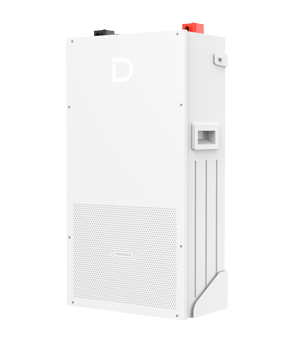
Integrating a premium Modular 48V Lithium Battery for Solar ensures that multi-unit parallel expansions operate with maximum efficiency and safety. Tier-1 manufacturers prioritize high thermal stability, seamless multi-module communication protocols, and rugged structural form factors tailored specifically for scalable projects.
As an industry leader in customized ODM and OEM energy storage products, Dyness designs advanced low-voltage storage architectures that simplify parallel expansion for B2B partners worldwide. By delivering highly compatible, plug-and-play modular building blocks with robust parallel capabilities, these systems allow distributors and installers to meet growing energy demands smoothly, ensuring long-term grid resilience and high client satisfaction.