 mada100

Catalytic systems in a sulfuric acid plant and in a diesel vehicle are often discussed separately, yet procurement teams comparing suppliers face similar questions about material form, thermal exposure, and documentation. A converter bed operates under continuous gas flow and controlled temperature, while an exhaust system must respond to load changes and vibration. The differences shape how a catalyst or substrate is specified, but the evaluation process can share a common structure. Hualian Catalyst provides product information for industrial catalyst media and ceramic catalytic converters, which can be a useful starting point when comparing how each application is documented.
Comparing Thermal and Flow Regimes
In sulfuric acid production, the contact process oxidises sulfur dioxide to sulfur trioxide over a vanadium-based catalyst. The reaction is exothermic and equilibrium-limited, so multi-bed converters use interstage cooling to balance reaction rate against conversion. Earlier beds often run warmer to support activity, while later beds operate cooler to favour equilibrium. This is a general design pattern rather than a fixed rule, and the actual temperature profile depends on gas strength, flow, and plant configuration.
A diesel exhaust system faces a different thermal pattern. Exhaust temperature and flow can change quickly with engine load, and aftertreatment components may spend time below their active temperature range. Ceramic honeycomb substrates are common because their thermal expansion behaviour can help them tolerate repeated heating and cooling, though the practical effect depends on substrate design and canning. Reviewing how a proposed component behaves across the expected duty cycle can be more informative than comparing a single steady-state figure.
Flow distribution also differs between the settings. Industrial converter beds are designed to limit channeling so that gas contacts the catalyst mass evenly, while mobile substrates must fit within constrained packaging without creating excessive backpressure. In both cases, the balance among surface area, pressure drop, and mechanical strength is a design compromise rather than a single best answer. A change in cell density or extrudate shape can shift that balance, so the proposed form is often reviewed together with the expected flow range.
Material Form and Contaminant Exposure
Industrial catalyst media are often produced as ring, daisy, or ribbed extrudates to provide surface area while limiting resistance to gas flow. Lower flow resistance can reduce blower load, which matters where blower power is a continuous operating cost. Unlike automotive exhaust systems that primarily manage soot and lubricant ash under transient thermal cycles, industrial catalyst beds often contend with particulate dust and trace chemical contaminants carried by a continuous gas stream. These deposits can accumulate in the bed, raising pressure drop and reducing accessible surface area. Operators may monitor pressure drop across passes and plan screening during turnarounds to restore flow characteristics before replacement becomes necessary.
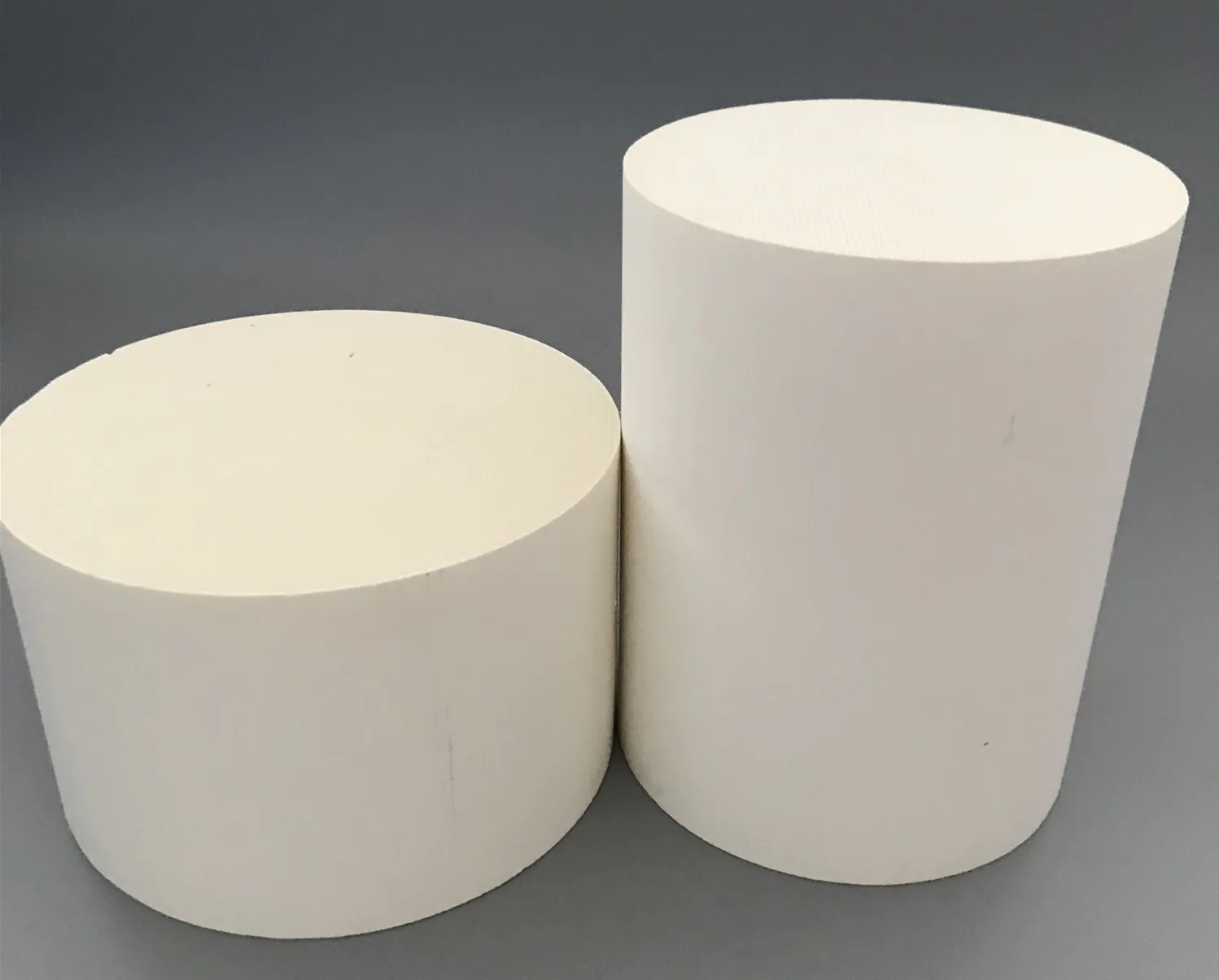
Mobile substrates are usually shaped as honeycomb monoliths to fit constrained packaging while maintaining flow distribution. Washcoat chemistry is selected according to the pollutants and temperature window, and the substrate should support even coating application. Ash from lubricant and soot accumulation can raise backpressure over time, and regeneration behaviour may influence service intervals. In both settings, the physical form is a compromise among surface area, flow resistance, and mechanical strength rather than a single best answer. A product page for a diesel catalytic converter may help clarify how substrate dimensions and cell configurations are organised for different emission standard requirements.
Mechanical loading is another shared consideration, although it appears in different forms. Industrial catalyst beds may experience settling and dust-related loading during long campaigns, while mobile substrates face vibration and canning pressure. Mounting arrangements and handling practices can influence how the ceramic or extruded body performs in service, which is why installation details are often reviewed alongside material specifications.
Documentation and Supplier Questions
When comparing suppliers, documentation quality can be as revealing as headline specifications. Inspection criteria, dimensional tolerance checks, and coating adhesion review are common in catalyst and substrate manufacturing, but the scope of those checks and the willingness to share them can indicate how variation is managed across production lots. It is reasonable to ask how a proposed grade was tested and whether the test conditions reflect the intended application. These questions apply to industrial media and mobile substrates alike.
For sulfuric acid plants, buyers may ask how the catalyst grade’s operating window was established and how it responds to thermal cycling and dust exposure. For diesel applications, buyers may ask how the substrate and washcoat were evaluated under transient conditions rather than only at steady state. Product information for catalytic sulfuric acid media can be reviewed alongside these questions, but it should be read with the plant’s gas composition and converter layout in mind. A specification that suits one plant may not suit another with different gas strength or maintenance practice.
Change management is also worth discussing. A supplier that can describe how specification revisions are communicated after approval may offer a more predictable supply relationship across repeat orders. This applies whether the component is an extruded catalyst for a converter bed or a ceramic substrate for an exhaust assembly. A documented revision process can help reduce the risk of silent drift between deliveries.
Matching Component to Duty Rather Than Label
A recurring difficulty in cross-industry procurement is treating a product category as a guarantee of performance. A catalyst described for sulfuric acid service is not automatically suited to every converter bed, and a ceramic substrate described for diesel aftertreatment is not automatically suited to every engine and duty cycle. The relevant question is whether the proposed component matches the gas composition, temperature profile, flow range, and installation constraints of the specific application. That question is more useful than comparing catalogue labels alone.
A structured technical dialogue with the supplier can address formulation selection, extrudate geometry, substrate dimensions, and loading arrangements for the intended duty. Such a dialogue may help clarify where a standard option is appropriate and where a modified configuration warrants review. For procurement teams, the aim is not to find a single supplier for all catalyst needs but to establish a review process in which claims can be traced, questions are answered, and specification changes are documented. That process is likely to be more informative than comparing headline values without context.